
Content has become more important than ever in the age of AI. Images, videos, captions, and entire articles can now begin with a simple prompt. Almost anyone can create something and publish it within minutes.
But when everyone can create content, what makes someone stop scrolling and pay attention to yours?
I believe the answer comes down to three things: content, strategy, and context.
AI Has Changed How We Create
Back in 2018–2019, our office had two talented graphic designers. Their creativity and skills were an important part of our work. Today, seeing AI take over parts of that process makes me think about how much the industry has changed.
Does that mean creative professionals will disappear? I don’t believe so. Their role will continue to evolve.
AI can generate a visual, explore different styles, and turn instructions into something useful. But it still needs direction. It doesn’t automatically know your customers, understand your business history, or recognise why a particular message matters to your audience.
You can show AI a reference and ask it to create something similar for your brand. That can be a useful starting point. The real creative work is deciding what your brand should say—and why anyone should care.
As more similar-looking AI content fills our feeds, I think people may become less interested in content that feels repetitive or disconnected from real life. That doesn’t mean AI content will fade away. It means our expectations will grow.
Good Content Earns the First Moment of Attention
Think about how we use social media today. Reels, feeds, endless scrolling—one piece of content quickly replaces another.
An image catches your eye. A headline makes you curious. A video opens with something you recognise. For a moment, you stop.
That moment is an opportunity for a brand.
When running Meta Ads or Google Ads, campaign setup, targeting, and optimisation all matter. But the message and creative people actually see deserve just as much attention. A carefully configured campaign still needs something relevant and convincing to show its audience.
The hook earns attention. What follows must give people a reason to stay.
That is why content matters so much.
Strategy Gives Content a Purpose
A brand needs more than attractive posts. It needs a plan for how those posts connect.
Who are you trying to reach? What do those people need? What should they understand about your brand? What should happen after they watch, read, or click?
Some small businesses have limited budgets and small teams, yet they build a strong presence on social media. A clear message, consistent effort, and an understanding of their audience can help them turn content into enquiries, sales, and brand recognition.
Good strategy gives each piece of content a job to do.
Context Makes AI Useful for Your Brand
This is where my headline comes together.
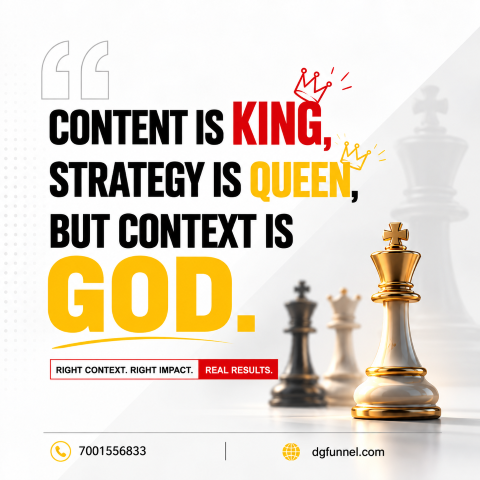
Content is what people see. Strategy decides how and why you use it. Context gives both their meaning.
When you use AI, context includes your audience, your offer, your brand’s personality, the customer’s problem, and the situation in which your message will appear.
“Create an ad for my business” gives AI very little to work with.
Explaining who the customer is, what they are struggling with, why your product matters, and what you want the ad to achieve gives it a much clearer direction.
Even a detailed prompt needs human judgement. Someone must decide whether the result feels right, says something useful, and represents the brand honestly.
That is where experience matters.
The Future Still Needs Human Direction
I don’t see AI disappearing. Like search engines, it will keep evolving and become part of how we work.
The opportunity is to combine its speed with our experience, creativity, and understanding of people.
For me, that is when the work reaches another level: strong content, a clear strategy, and the right context working together.
Content is king. Strategy is queen. But context is God.
Turn content into meaningful brand growth.
Get a practical growth plan built around your market, website and business goals.